INTERACTIVE MATERIALS SCIENCE

Turn figures
into understanding

Interactive visualizations and animations across materials science.

Browse the visualizations

Figure 1 · Hau et al., Adv. Mater. 2025

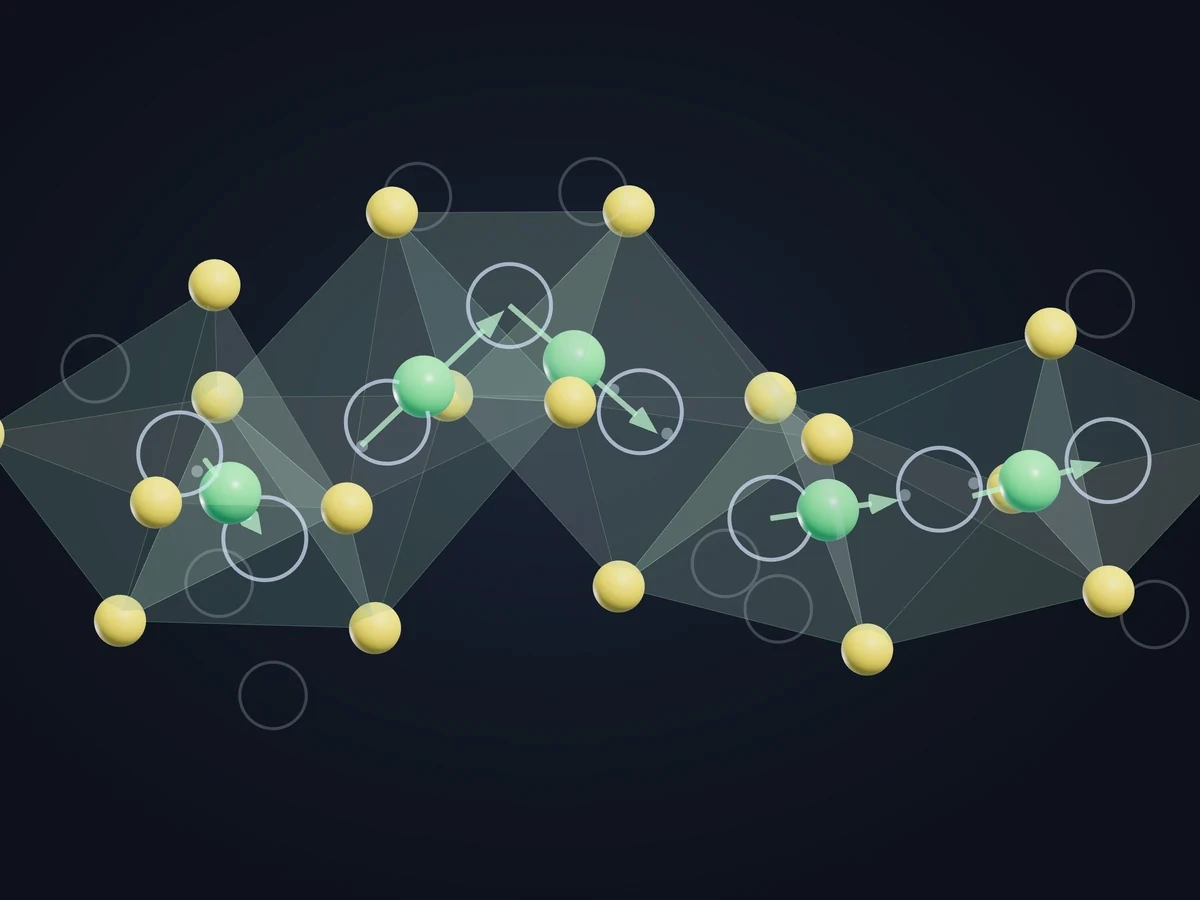
Figure 1 maps lithium pathways in three structures

The slider scrubs the whole sequence. The first part focuses the paper figure and lifts its 1-TM glyph into three dimensions. The last part moves lithium from its octahedral site, through the tetrahedral site, into a vacant octahedral site. The pathway is schematic and the timing is illustrative.

Figure 1 © 2025 Hau et al. · CC BY 4.0

The paper figure becomes an idealized three-dimensional lithium-ion hop. Once the model has formed, drag or use the arrow keys to rotate it, and Home to reset. The Li⁺, O, TM and Empty site buttons highlight each part of the model.

FOUNDATION · ENERGY

How a battery
works

One reaction. Two paths.
Follow the charge, then go inside graphite.

Explore the visualization
Live 3D preview: lithium crosses the cell while electrons take the external circuit.

BROWSE THE COLLECTION

More visualizations,
more to explore

Five green lithium ions part-way through one collective hop along a chain of translucent oxygen cages in the garnet LLZO, rendered from the explorer’s model.

PAPER COMPANION · SOLID ELECTROLYTES

Lithium that
moves together

See why five ions hopping at once face a lower barrier than one ion alone.

Explore the visualization
Two particle radii at the same elapsed timeCross sections of a 50 nanometre and a 25 nanometre sphere after the same time of constant-diffusivity diffusion from a fixed surface concentration. Rings are calculated concentration contours at 20, 40, 60 and 80 percent of the surface value. The smaller particle is nearly filled while the larger one is still empty at its centre.
Same elapsed time · calculated contours

FOUNDATION · DIFFUSION

Smaller particles,
shorter journeys

See how distance shapes diffusion.

Try the model preview
Chance that a lithium network crosses a random crystalFraction of random disordered rocksalt crystals whose 0-TM lithium network crosses the crystal, against lithium excess from 0 to 30 percent, for crystals 3, 6 and 16 cells across. Larger crystals switch more sharply, close to the 9 percent reported for fully random cations. Calculated by running the original companion's own lattice model over many random seeds.010%20%30%100%50%Li excessnetwork crosses≈9%
Calculated from the companion's own model

COMPANION PREVIEW · CATHODES

One hop is easy,
crossing is harder

Follow lithium from a single site to a network.

Open the companion
Illustrative Nyquist curveThe impedance of a series resistor and parallel resistor-capacitor element, plotted as negative imaginary versus real impedance. A simple electrical model, not a measured spectrum.real−imaginary
Illustrative RC response

PLANNED · IMPEDANCE

A signal becomes
a spectrum

Connect the response to the curve.

THE IDEA BEHIND FIG.3D

Build intuition,
keep the evidence

A growing library of interactive scientific visualizations and animations. Find a question, explore a mechanism, and see how materials behave.

The first entries explore batteries. The collection will grow across materials science—from structure and properties to transport and change.

Our verification standard

Each visualization keeps its sources, assumptions and checks close by. Planned entries have not completed their release checks.

Human expert review is optional, not a release requirement. AI agreement does not establish empirical validation or peer review.

SOURCE & MODEL

From the figure
to the spatial idea

The opening image is the original Figure 1 extracted directly from the paper by Hau et al., Disordered Rocksalts as High-Energy and Earth-Abundant Li-Ion Cathodes, Advanced Materials 37 (2025), 2502766. The native 1500 × 850 pixels are preserved without repainting or AI enhancement. Page headers, captions and screenshot controls are outside this original image.

We focus on the layered structure’s local 1-TM hop. The zoomed glyph lays back like a page on a desk while its green Li, purple transition metal and dashed vacant sites rise out of it, keeping their identities, into an ideal rocksalt model. A second vacant gate site is revealed in depth: this example uses a divacancy configuration. The three columns in the paper compare different orderings; they are not stages of a phase transformation.

Lithium follows a schematic octahedral → tetrahedral → octahedral route through two triangular faces of oxygen, and each window lights up as lithium crosses it. Bright red spheres are the four oxygens around the tetrahedral site; darker red ones complete the two octahedra on either side. As lithium passes the intermediate tetrahedral site, the one transition metal that shares a face with it turns that face violet. The story holds lithium there only so the caption can be read; like all its timing, that hold is illustrative. Select Li⁺ to emphasize the six oxygen neighbors of an octahedral endpoint. Atom sizes are symbolic, and the camera briefly widens during the lift to show depth without changing any geometry.

This is an idealized geometric reconstruction, not a crystal structure recovered from the image. The animated geometry is an adaptation for Fig.3D. Motion is illustrative, not a calculated migration trajectory or timescale. No energy barrier, universal channel activity, material performance or diffusion coefficient is calculated. Local relaxation, interactions and collective motion are omitted.

Figure 1 from Hau et al., Advanced Materials 37 (2025) 2502766, © 2025 The Authors, published under a Creative Commons Attribution 4.0 licence (CC BY 4.0). Fig.3D shows it with its own outline, dimming, zoom and arrows, and the 3D model is adapted from it by Fig.3D. Fig.3D is an independent explainer, not affiliated with or endorsed by the authors or the publisher.

Read the source paper

Explore the hop in the companion

Human expert review is optional. Geometry checks support this illustrative model; they do not establish empirical validation.

PLANNED VISUALIZATION

This visualization is still to be built and checked.